FIVE TIPS FOR… AN ERASMUS SEMESTER

I spent a semester at Leiden University, Netherlands, under the Erasmus scheme. I t was a great experience; I gained new skills, made amazing friends, and saw wonderful places.

Here are a few tips on how to get the most out of your semester abroad:

OneOne. Pack well

One of the best things I did before I left was really think about what I wanted to take with me. I flew, so I only had hand luggage and a 20kg bag in the hold. Sounds loads right? Nope!

4603358068_d2a61cc1c0_m

It turned out to be quite hard to pack 4 months into just two bags.

My suggestion is to make a list of the essentials before you pack so you don’t leave anything you really need behind.

But all is not lost, the postal service is great!

TwoTwo. Get to know your neighbours

Accommodation varies between cities. You may end up halls, or in private housing. But, wherever you end up get to know those around you.

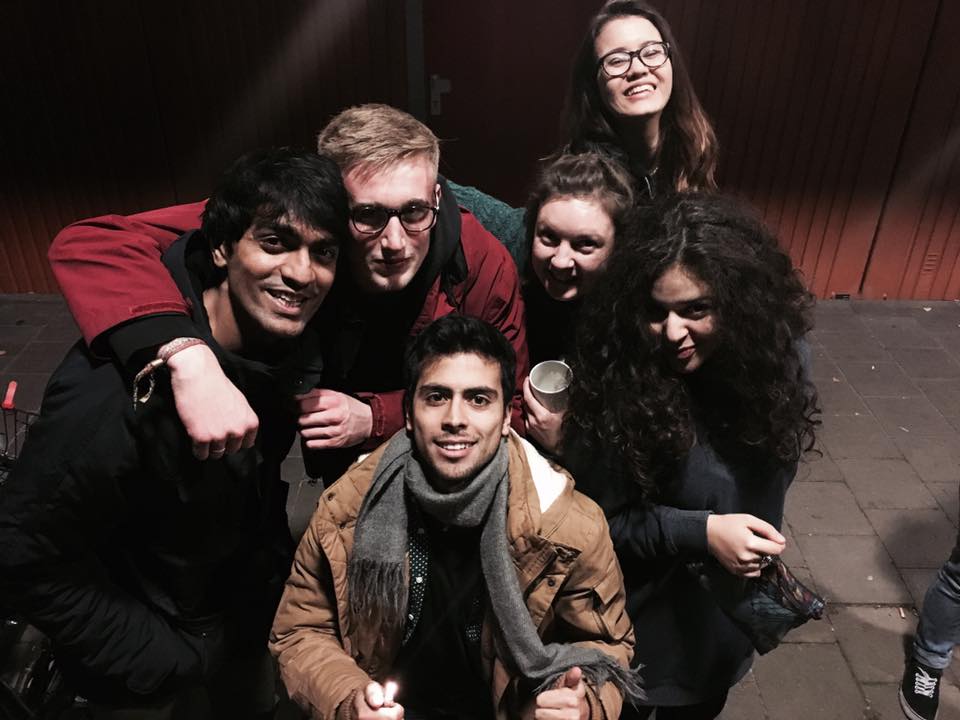
I lived in a studio flat in a building made up of likewise apartments. It was great living on my own but if I hadn’t met my neighbours I think I would have been quite lonely, especially as I lived far away from the friends I made at Uni.
15355654_10209613580594543_3706312351761187152_n

So…

If you live in a building or halls there may be a group on Facebook you can join – I posted on a group like this saying knock on my door to say hi, and people did!

You should also knock on your neighbours doors, go out and say hi when you hear people talking outside your room. And, if there is a communal area, use it!

ThreeThree.  Explore

A semester abroad is a great opportunity to see and experience new places. Start by getting to know the city you live in, I find walking the best way. Arm yourself with a map and don’t be afraid of getting a 14724503_10209569534026775_7442367674849148446_nbit lost, sometimes the best places are found this way
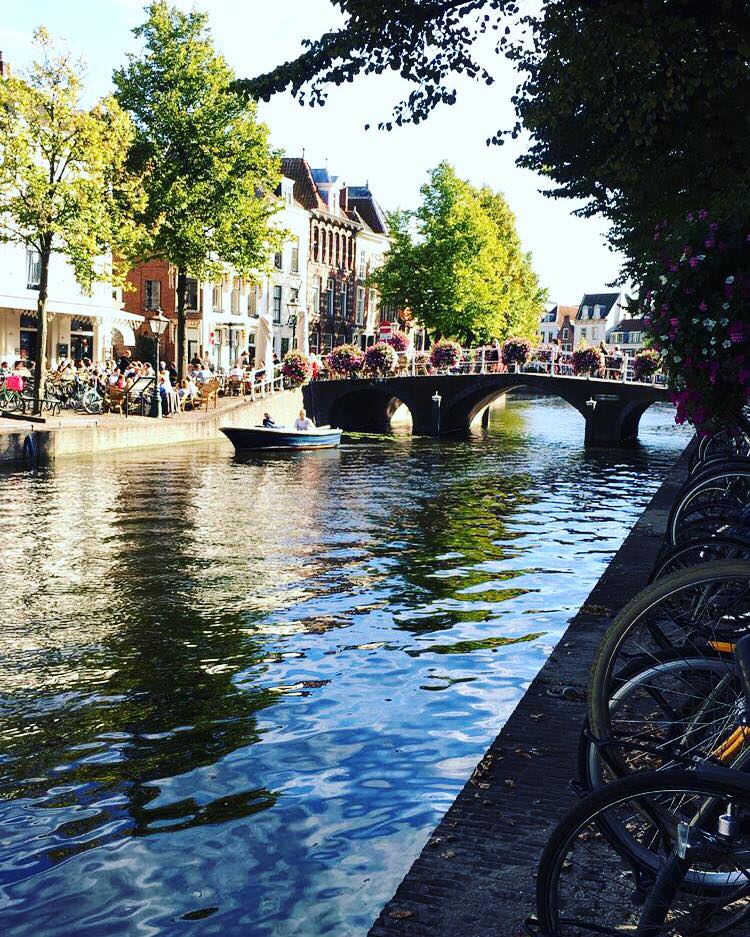
Also, take advantage of being in Europe, there are loads of cheap connections by coach and train to various European cities. Have fun!


FourFour. Embrace new Language

Although there are many who people begin an Erasmus semester as part of a language course there are also just as many who don’t and could spend their whole time speaking their native language. Yes, this is easy, especially when a lot of people speak good English, but why not take advantage of your new location to learn a new language! Or at least a few words, it is respectful and they will always come in useful.

 

FiveFive. Look after yourself

You’re in a new city, there is so much to experience – A new nightlife to explore; a different dating scene. Have fun, but remember to look after yourself. No one wants to get ill, or even worse, hurt! So remember to be careful, and look after yourself..

  • Don’t drink too much if you are unsure of your way around,
  • Try to have a few good nights of sleep,
  • Eat properly, I am sure this wont be hard with a new countries cuisine to try!
  • Date responsibly
  • Most importantly – explore, get involved, socialise, and have fun!


VISUALISING LABOUR: CALL FOR PAPERS


Workers and Work in Photography and Film


The Labour and Society research at Newcastle and Northumbria Universities is organising a two-day conference on the photographic and filmic representations of labour on the 5th– 6th May 2017 at Newcastle University. There will be keynote addresses from Professor Jonathan Long (Durham University) and Dr Simon Dell (UEA). We would welcome short abstracts (300 words) for papers relating to any aspect of the conference’s theme. 

Visualising labour is not a neutral process. Surveillance, propaganda and advertising have depicted labour on behalf of capital or the state. Through genres such as social documentary or activist film and photography, that hegemony has been challenged. This conference seeks to draw together labour historians and scholars of visual culture to examine the visual representations of labour. This cross-disciplinary dialogue has the potential to develop a fruitful exchange of insights, affinities and critical perspectives.

We particularly encourage papers from those working in the following areas:

·         Media representations of work and workers.

·         Worker-photography movements.

·         Photographic or filmic representations of the experience of working people. 

·         Gender and the visualisation of labour.

·         The relationship between photography or film and labour movements.

·         Photography of place and labour.

·         Visual imagery, memory and labour.

·         Photography and emotional labour.

·         Representations of unemployment and the unemployed.


Please submit abstracts (300 words) and a short CV to Ben Partridge at b.partridge@ncl.ac.uk before 31st January.


Democracy and people power conference, Durham

This cfp could be of interest to some of us – contact the organisers for more information.

Call for Papers: “We the People: We the People: Democracy, Democratization and people power in the 21st Century”.

Conference organized by the SGIA PhD Association 8th December 2016 Senate Suite, Durham Castle.

Building on last year’s successful conference, this conference is organised to offer doctoral researchers across all universities in the North East (Northumbria, Sunderland, Teesside, Newcastle and Durham) an opportunity to present their work and receive feedback from peers and academics in a cooperative environment. Moreover, participants will be able to gain invaluable experience in conference participation and have the chance to expand their network with other students in the region. The conference will address three main areas: theories of democracy, democracy in state institutions and democracy outside and beyond the state. Submissions with a national, regional or global focus are all welcome, and are expected to contribute to academic debate either in a theoretical, empirical, or methodological perspective. Abstract length should be no longer than 200 words, and should include the title of the proposed paper, the author’s name and institutional or departmental affiliation.

Please send your abstracts to Edward Walker or Elisabeth De Vega Alavedra at sgia.pa@durham.ac.uk by the 15th of July 2016 deadline. We look forward to receiving your abstracts!

Best wishes, Edward Walker and Elisabeth de Vega Alavedra for the SGIA PhD Association For more information on the SGIA PhD Association, email us at sgia.pa@durham.ac.uk or contact us through Facebook at https://www.facebook.com/groups/sgia.phd.association/

13th Annual Postgraduate Forum Conference

‘Individuals and Communities’

20th May 2016

Room 2.22, Research Beehive, Newcastle University

9.00 – 9.15 Tea and Coffee
Panel 1

Chair: Lauren Emslie

9.15 – 9:45  George Scratcherd (University of Oxford)

The four horsemen of the AME Church: ‘Great Men’ and the challenges of black church historiography.

9.45 – 10.15 James Mullen (Newcastle University)

God, King, and the Land: The relationship between Neo-Assyrian Kings, their subjects and the God Aššur.

10.15 – 10.45 David Astbury (Newcastle University)

Can path creation theory restore the agency of individuals and communities in the past?

10.45 – 11.15 Tom Whitfield (Newcastle University)

“Wilkes and Liberty”—Punch bowls and the later-eighteenth-century Wilkite agitations.

11.15 – 11.30 Tea and Coffee
Panel 2

Chair: Amy Shields

11.30 – 12.00 Mareike Ahlers (Newcastle University)

All for One and One for All—Identifying heterarchial structures in Early Neolithic barrow building communities.

12.00 – 12.30 Henry Clarke (University of Leeds)

Negotiating individual identities within the community in Central Spain, 2nd century BC – 2nd century AD.

12.30 – 1.00 Kate Caraway (University of Liverpool)

Group size and community cohesion in Archaic Greece: Towards a methodology.

1.00 – 2.00 Lunch and poster session
Panel 3

Chair: Lucy Cummings

2.00 – 2.30 John Bowman (Newcastle University)

Derwentcote Forge Cottages: A steel making community in the Derwent Valley 1841-1891.

2.30 – 3.00 Lawrence Mills (University of Glasgow)

Building the Old College

3.00 – 3.30 Alberto Cafaro (University of Pisa)

Praefecti fabrum and Roman politics.

3.30 – 4.00 Andrew Marriott (Newcastle University)

Entrenched Views. Accessing the people of the First World War through Material Culture

4.00 – 4.30 Tea and Coffee
4.30 – 5.30 Keynote: Dr Valentina Arena (UCL)

‘The Individual and the Community in Republican Political Thought’

5.45 Reception and prize giving (Student Common Room, Armstrong Building)


PGF Conference Programme

It’s that time of year again: the sun is out, the birds are singing… and the PGF Conference is  soon!

The theme for this year’s conference, if you didn’t know it yet, is Individuals and Communities. We have a great day lined up for you, some interesting papers from across the disciplines and across the country (and beyond!), so come along to the Research Beehive on campus on 20th May. There will also be posters on postgraduate research.

You can find the programme here.

UPDATE: The research beehive can be found at number 25 on the campus map.

You can follow us @NewcastlePGF for information and live tweeting. Use the hashtag #PGFConference to join the discussion.

Exploring Classical and Historical Northumbria: Warkworth Castle

Dr. Susanna Phillippo  will be continuing her ‘Exploring Classical and Historical Northumbria’ trips this Sunday (17th April) with a visit to Warkworth Castle and Hermitage.

Details are as follows:

Depart c. 12.10, return c. 18.05
Cost: £7.80 for transport
A visit to the impressive medieval Percy fortress in the scenic town of Warkworth.
• Picturesque town dominated by showpiece medieval castle, home to a number of key players in English history, notably the Percy family (the original ‘kings in the north’).
• Wars of the Roses, the English Civil War and several wars with Scotland(!)  feature among the many historical events in which the castle and town played a part.
• Castle features in Shakespeare’s *Henry IV* plays: the scenes which he set here make use of elements from classical writers Plutarch and Virgil — we shall hear about these on site, and visit the exact locations!
• Unique 13th-century hermitage elaborately carved out of the solid stone of the river bank.

As with previous trips, entrance to the castle is free by special arrangement with English Heritage. We travel by bus: the X18 from Haymarket bus station, outside Marks and Spencers.
Schedule:
Meet at Haymarket bus station (usually Stand Q), ideally by *12.05*.
Catch 518 bus at 12.13.
Arrive Warkworth (via part of the scenic Northumbria coastal route) 13.40

Best to bring sandwiches to eat on the bus: refreshments including hot drinks are available at the Castle but there’s no cafe as such.

The bus drops us close to the castle; we’ll have ample time to explore it, and hopefully the hermitage (to which visitors are ferried by English Heritage rowing boat!) before heading downhill into the village for a refreshment stop in one the village’s excellent cafés/pubs (one of the latter serves particularly good scones!).

We will aim for the 16.37 bus back from Warkworth, getting back to Haymarket at 18.06.  Buses leave at 37 minutes past each hour, though, so you can catch an earlier or later bus back if you like.

Cost: An Arriva all-day ticket (£7.80) is the cheapest option.  Entrance to the castle is free; otherwise, just bring money for refreshments.

If you would like further details, email Dr. Phillippo at susanna.phillippo@newcastle.ac.uk.

Newsletter, week 12.04.16

Sorry the newsletter is late this week (IT fault…).  If you would like to promote an event, please get in touch
(m.ahlers1@ncl.ac.uk).

Research Seminars

Archaeology:
Tuesday 12th April, 6-8 pm, Armstrong Building, Room 1.06
Stephanie Moat (Newcastle University): ‘New Perspectives on Provincial Religious Statuary: A Case Study from Roman Britain and North Africa’

Classics and Ancient History:
Wednesday 13th April, 5-7 pm, Armstrong Building, Room 2.50
Eric Csapo (Sydney): ‘Choregic dedications and what they tell us about comic performance in the fourth century BC’


Further School Events

The Extraordinary Gertrude Bell Exhibition
30th January 2016 – 3rd May 2016, Great North Museum

Newcastle University Public Lectures

14th April, 5:30-6:45pm, Curtis Auditorium, Herschel Building
Sian Reynolds (Professor of French, University of Sterling): ‘Children of the revolutionaries’

Live Music

14th April, 1:10-2pm, Brunswick Methodist Church, Newcastle
Sarah Beth Briggs (piano):
Beethoven: Bagatelles, Op. 199, Nos. 1-4
Hayden: Sonata in C, Hob XVI/50
Debussy: Reflets dans l’eau (from first book of Images)
Chopin: F Minor Fantasy, Op. 49
Free admission

14th April, 4:30-5:30pm, Spaces 4 and 5, Culture Lab, King’s Walk
Student Performances including Alex Guthrie (piano), Nishant Verma (drums), Mark Johnson (drums), Joe Harmsworth (guitar), Grace Alexander (keys)
Free admission, limited capacity

Just a minute with… Emma Nicholson

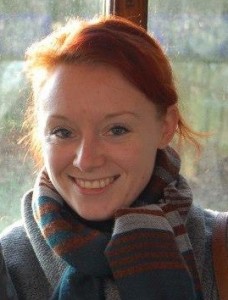
emmaDr. Emma Nicholson finished her PhD on Philip V of Macedon in Polybios’ Histories at Newcastle in December 2015 and is currently teaching in the department. her research interests include Hellenistic history, historiography, epigraphy, leadership, cultural politics, cultural values and interstate relations. Traveller, artist, lover of movies, good food, good beer, and books. find her on Twitter.


  1. How did you come to be interested in your current area of research?

I’ve been interested in the ancient world since childhood, but came to love Macedonian and Hellenistic history during my BA and my MA. Philip V and Polybios emerged as top for the PhD.

  1. What advice would you have for current UG or early stage PG students?

Start early, work hard, work consistently, but always leave time for yourself!

  1. What book are you currently reading?

Too many!

  1. If you were a biscuit, what sort would you be?

Something chocolatey.

  1. What has been the highlight of your week?

Having an old friend over for the weekend. Lots of food, fun, geek and games!

  1. What is the most important life skill you learnt whilst being a PGR student?

Finding a decent work-life balance and not feeling guilty about taking time off. We worry so much about our work and achievements that we forget to take care of the very instruments (our brains) which get us there!

  1. Do you have favourite hidden gems of Newcastle?

Gorgeous little Café 1901 in Jesmond.

  1. What has been the most significant/memorable moment of your academic career so far?

A four-month research trip to Erlangen, Germany!

  1. What do you enjoy the most about being part of the history, classics and archaeology department at Newcastle?

People are supportive, connected and get involved.

  1. What would your perfect day away from work be?

Either reading/playing games at home all day, or hiking up a mountain somewhere.

  1. What is your favourite movie quote?

“All we have to decide is what to do with the time that is given us” (Gandalf, The Fellowship of the Ring). Ok, it’s originally a book quote, but all the same.

  1. What’s next for Emma?

New adventures!


Thanks , Emma! We are all behind you all the way, wherever those new adventures may lead you.

ScARF student network

The Scottish Archaeological Research Framework (ScARF) will be giving a seminar 12-13 on 21st March in Armstrong 2.09. This will be a great opportunity for anyone working on aspects of Scottish history and archaeology to network and think about their own research in the wider context.

More details can be found here.

Newsletter, week 22.02.16

Once again, the newsletter.  If you would like to promote an event, please get in touch
(m.ahlers1@ncl.ac.uk).

Research Seminars

Archaeology:
Monday 22nd February, 5-7 pm, Armstrong Building, Room 2.28
Dr Eugene Costello (NUI Galway)’ Booley houses and herders: an historical archaeology of transhumance in the west of Ireland’

History:
Wednesday 24th February, 5-7 pm, Armstrong Building, Room 1.04
Aditya Sarkar (University of Warwick): ‘Arrears Due: Wage-Payment and the Labour Question in Late-Colonial Bombay’

MedLAB:
Thursday 25th February, 5-6.30 pm, Armstrong Building, Room 2.16
Philip Garrett (Newcastle University): Title TBC

Further School Events

The Extraordinary Gertrude Bell Exhibition
30th January 2016 – 3rd May 2016, Great North Museum

Newcastle University Public Lectures

Tuesday 23rd February, 5:30-6:45pm, Curtis Auditorium, Herschel Building
Helen Berry, Professor of British History, Newcastle University: Gertrude Bell and the ‘Woman Question’
Free admission

Thursday 25th February, 5:30-6:45pm, Curtis Auditorium, Herschel Building
Clive Morton OBE, Professor of Corporate Governance and Business Development, Middlesex University Business School: Tackling uncertainty in organisations –the future: opportunity or threat?

Live Music

Thursday 25th February, 4:30-5:30pm, Spaces 4 and 5, Culture Lab, King’s Walk
Student Performances
Including Desmond Lau (clarinet), Masoud Hardan (guitar), Joe Reeve (saxophone), Abigail Brierley (trumpet), Liam Mulpetre (guitar)
Free admission, limited capacity