What’s New for 2026?

Pons Aelius 17 (May 2025)

In This Issue

Steve Kendall, Talking to a Whalebone Box about Poetry: The Franks Casket and the Creative Process.

s.kendall1@newcastle.ac.uk  

Zenia Duell, Classics in Prison.

zenia.duell@kcl.ac.uk 

Nina Büchner, Pandora and Eve: Women as the Origin of Evil in Creation Mythology.

ninabuechner0@gmail.com 

Sophie Norman, Vocalising Female Rebellion in Early Modern Finnmark’s Witch Trials.

sophiekhnorman@outlook.com 

T.N. Gibson, “All in the name of progress… and for a few lousy bob”: Brassed Off, Rebellion and Deindustrialisation.

t.gibson6@newcastle.ac.uk

Ally Keane, ‘It became a symbol of my incapacity and I hated it’: Resistance to High-Technology Augmentative and Alternative Communication, c. 1980-2020.

a.j.keane@newcastle.ac.uk

Bernardo Carvalho De Mello, Global South Narratives of Rebellion in International Human Rights Law.

b.carvalho-de-mello2@newcastle.ac.uk  

Barnaby Falck, The Bunny Game – A modern counter-cultural rebellious masterpiece of female empowerment and subversion of filmmaking norms.

bfalck@lincoln.ac.uk 

Introducing the PGF Committee: Leanne Smith, Seminar Co-Ordinator

Tell us a little bit about yourself

I live with my son Isaac (11) and my cat Arabella (Bella). Isaac is my absolute world. He’s the reason I decided to go to university as I want to inspire him to follow his dreams.  I absolutely love watching documentaries, my favourite was about ordinance survey maps! I also have a slight obsession with James Blunt. 

Tell us a little bit about your research 

My research is focused on the political & religious thought of the Fifth Monarchy Men in England during the seventeenth century. They were a millenarian sect that believed it was their purpose to reform society ready for the second coming of Christ. The current historiography of the group has tended to concentrate on their religious ideas and has dismissed their engagement with political ideologies, such as republicanism.  

What was it that got you interested in your current research topic? 

I was researching for an essay during the first year of my BA and stumbled across the Fifth Monarchists. I found it strange that it was written during the time that they were ‘never to be forgotten sect’ and yet they have largely been forgotten. They have been overshadowed by other seventeenth century radical groups that have been considered by some historians to engage with political concepts that we are certainly more familiar with in modern society. The religious beliefs of the Fifth Monarchy Men do not fit comfortably within this secular narrative.   

What has been the best/most enjoyable part of your PhD so far? 

I recently delivered my first paper. This was originally due to take place in my first year but was delayed due to Covid-19 but thankfully I was able to present this online. I was extremely nervous and practically lost my voice practising my talk, but it was really enjoyable. I also got some really good feedback and advice on other avenues to pursue. 

And what has been the most challenging?  

Dealing with my guilt as a parent. There are often times when I will work over the weekend or during school holidays and I feel like a terrible Mam.  

Has Coronavirus impacted your research?

Thankfully, most of my sources are available online but the first lockdown really impacted as the schools were closed and I had to take time to help Isaac with his schoolwork. The pandemic has also impacted my mental health much more than I thought it had. I think being away from my friends and away from the university I just felt like I wasn’t part of anything anymore. That’s why I am loving my role as series seminar co-ordinator I now feel like I am part of a community! 

What would be your most important advice for someone just starting their PhD?  

Be kind to yourself and DO NOT compare your PhD journey with anyone else’s 

What are your post-PhD plans?

The dream is to be a lecturer. 

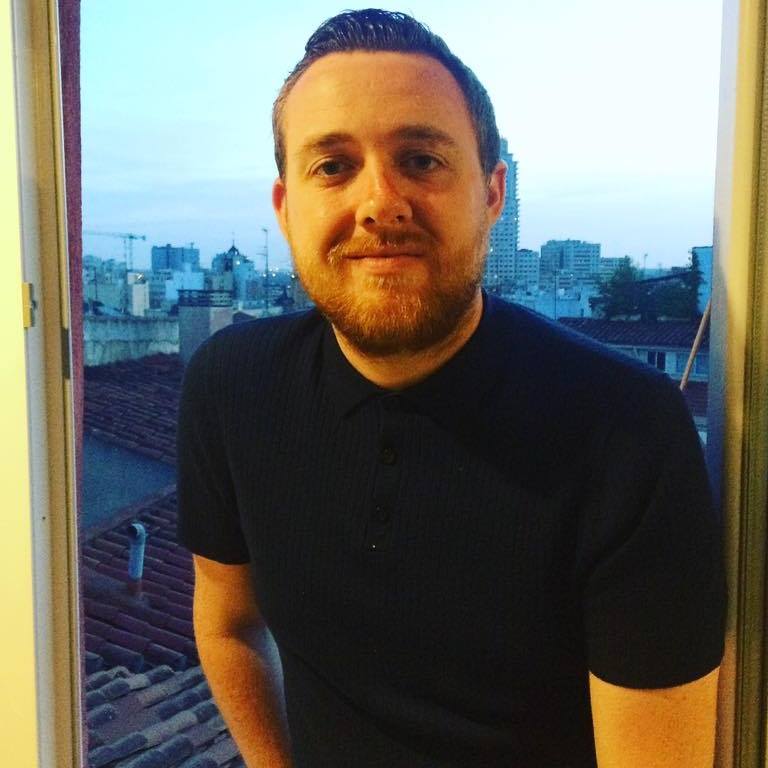
Introducing the PGF committee: Rob Granger, Chairman

Hi, I’m Rob and I’m a second year PhD student in history and currently the Chair of our Postgraduate Forum at Newcastle. After two years in Madrid trying (and mostly failing) to speak Spanish with a Yorkshire accent, and being torn between missing my dog back in the UK, and being able to go to rooftop bars in November, I’ve ended up back in Newcastle – where I completed my BA and MA degrees – to continue an academic path that started out with a second year essay on the Franco dictatorship.

My thesis will explore the later (c.1964 – 1975) Franco regime’s attempts to generate social and political consent during a period of growing unrest that has traditionally been seen as an era of terminal decline for the dictatorship. For obvious reasons, I haven’t been able to get to Spain, so progress has been difficult, but this experience has taught me that there are always more people in the same boat as you as you might think.

A piece of advice I’d definitely give is to use Twitter as an academic networking tool, which I’ve only started to do relatively recently, but has already led to both productive working relationships and personal connections with other PhD students researching modern Spanish history, who are going through many of the same challenges and frustrations at the minute as me, particularly in terms of travel and access to archives etc. If all goes according to plan, the goal post-PhD would be to try and find someone who’s willing to pay me to continue to think, read and write about modern Spanish history! 

16th Annual PGF Conference

Our annual post-graduate forum conference is less than two weeks away!

This year’s theme is ‘Conflict’ and a variety of papers are lined up from History, Classics and Archaeology.

Here is our Conference program. 

Feel free to come and go throughout the day, registration is not necessary.

Hope to see you there,

The PGF Committee


Welcome

We would like to welcome all new postgraduates to Newcastle and of course welcome back everyone else!

We are really excited to meet you all!

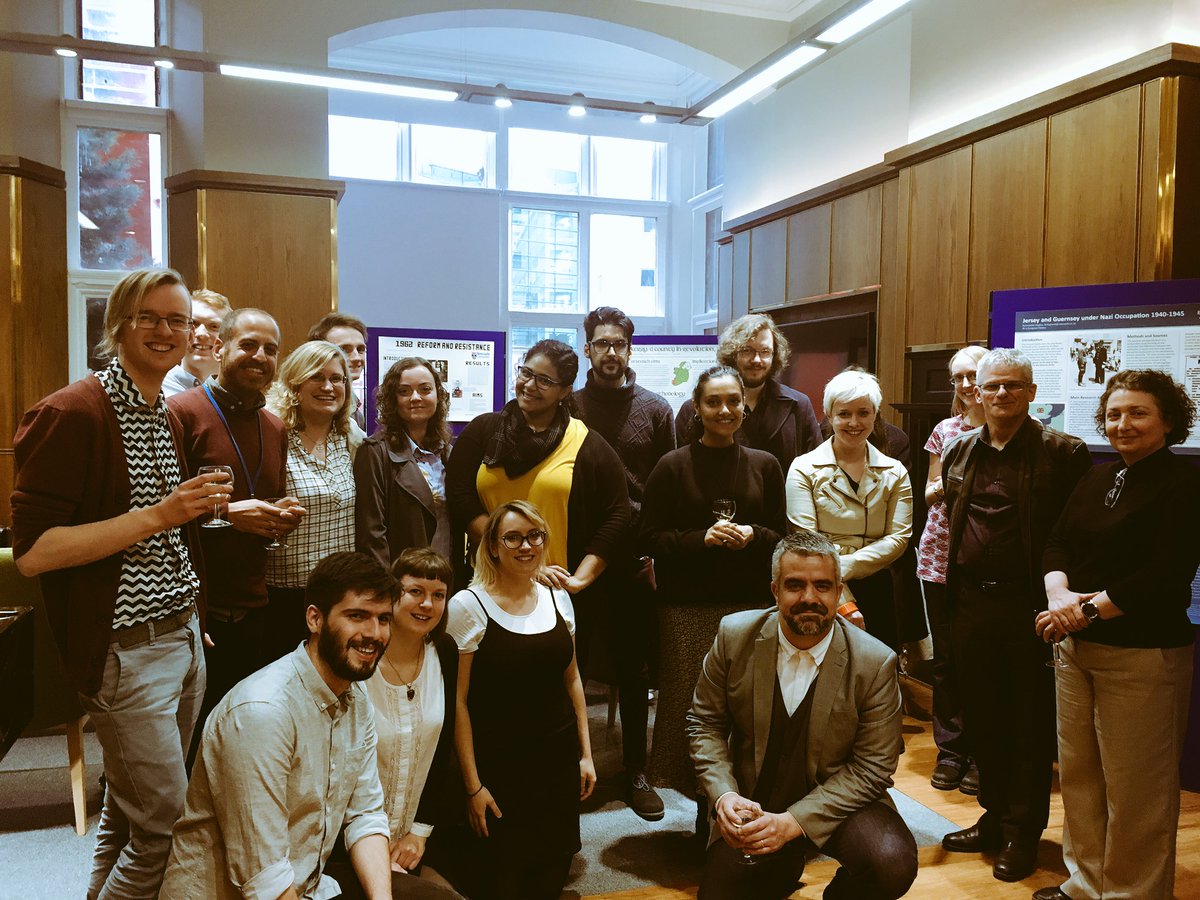
daq6lvuwaaeguhy

The committee has changed quite a bit this year and we have some great ideas for the coming months so watch this space!

So what do we do? In a nutshell:

  • Seminar series
  • Socials
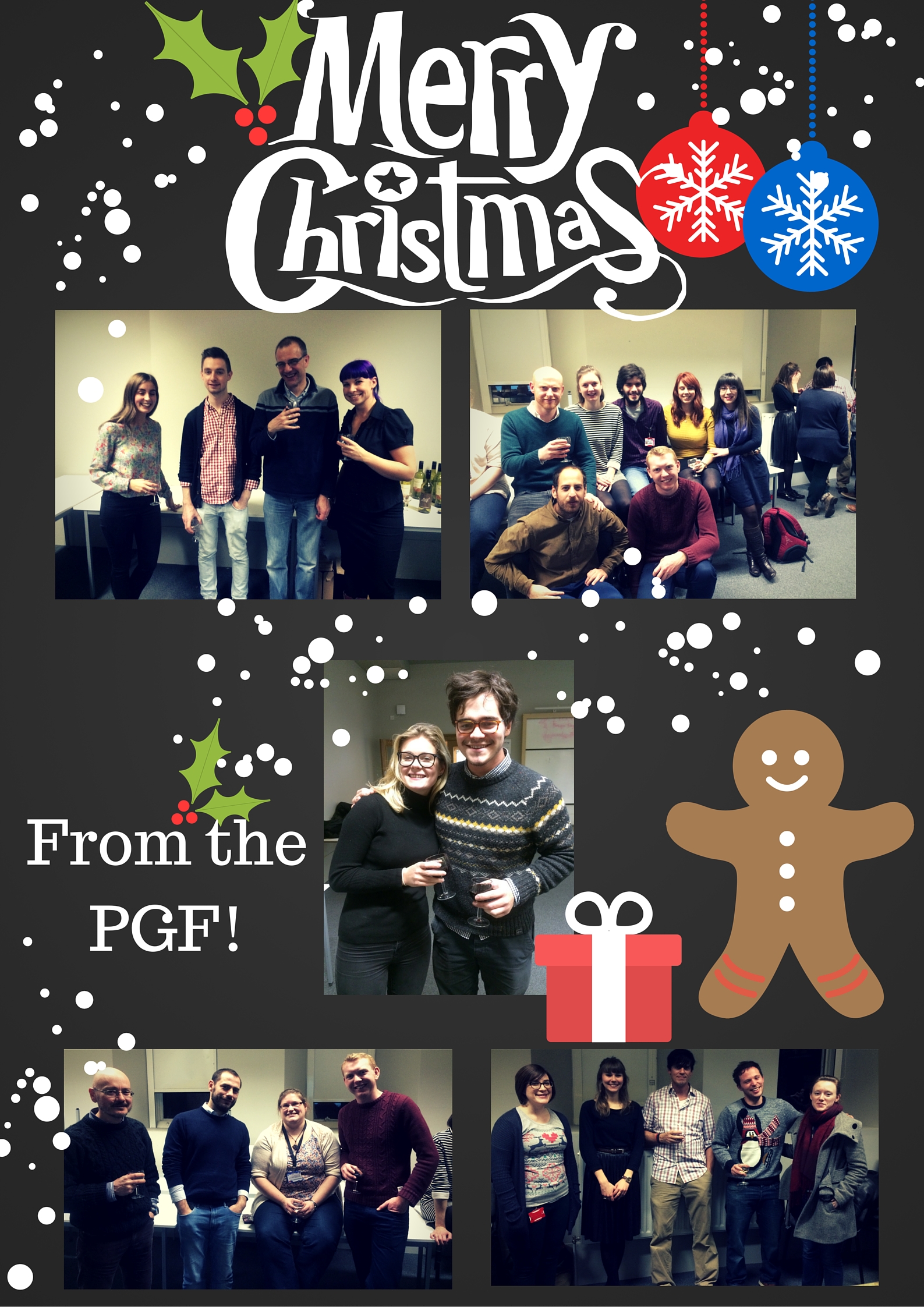
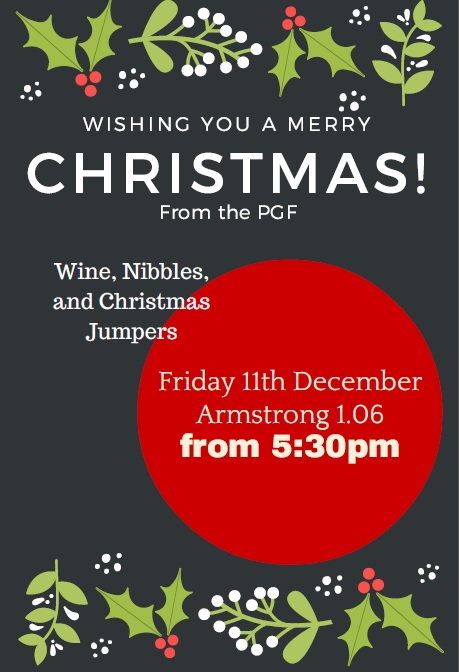
  • Christmas and end of year parties
  • Journal
  • Blogging and other social media
  • Conference

As we all know, doing your PhD or MA is hardly a walk in the park; everyone is isolated by the uniqueness of their research, which can make it seem like no one really understands what you are going through. We also know that it can be difficult for people to get involved if they don’t live locally, if they work, or are doing their Postgraduate degree part time. That is why, this year, we are making a concerted effort to match our lively presence within the School as well as online – find us also on twitter  and facebook!

https://www.facebook.com/NewcastlePGF

https://www.facebook.com/groups/PGFNewcastle/

We aim to get to know each other better and share our research interests.  We will use this space to advertise our events and update you through our monthly newsletters.  In the next few days we will collecting information for our postgraduate profiles, which we would like to post up on this site for you all to know who we are and what we do.

There is lots going on, so we hope to see you all at our events and perhaps even blogging for us!

The PGF committee.


Congratulations to the Winners of our 14th Annual Postgraduate Forum Conference

14th Annual Postgraduate Forum Conference Winners

School of History, Classics and Archaeology

Newcastle University

19th May 2017


‘Movement’


This interdisciplinary one-day conference brought together Postgraduate students studying histories relating to the theme of Movement. How do we study the past, not as static, but as dynamic and changing? How does the movement from one context to another change how we interpret evidence? What are the effects of movement on societies, material, and intellectual cultures? How has the idea of movement, or a movement, been used for political, social, or artistic purposes?

We heard many fascinating papers covering a broad range of topics relating to movement as well as a large array of posters from our very own Masters students.

We are pleased to announce the winners of this years conference are:

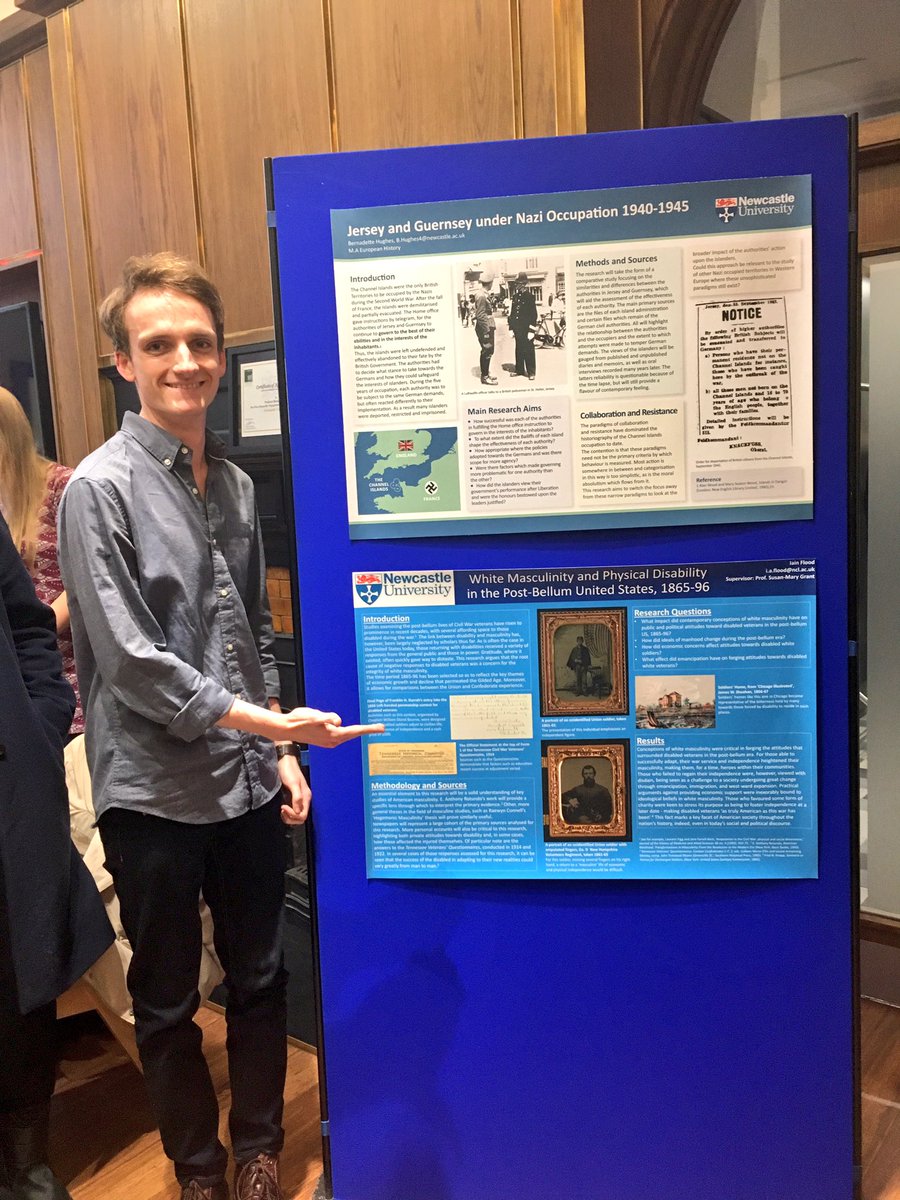
Best Poster: Iain Flood, Newcastle University

“White masculinity and physical disability in the post-bellum United States, 1865-96.”

daq6faexcaeqvnf

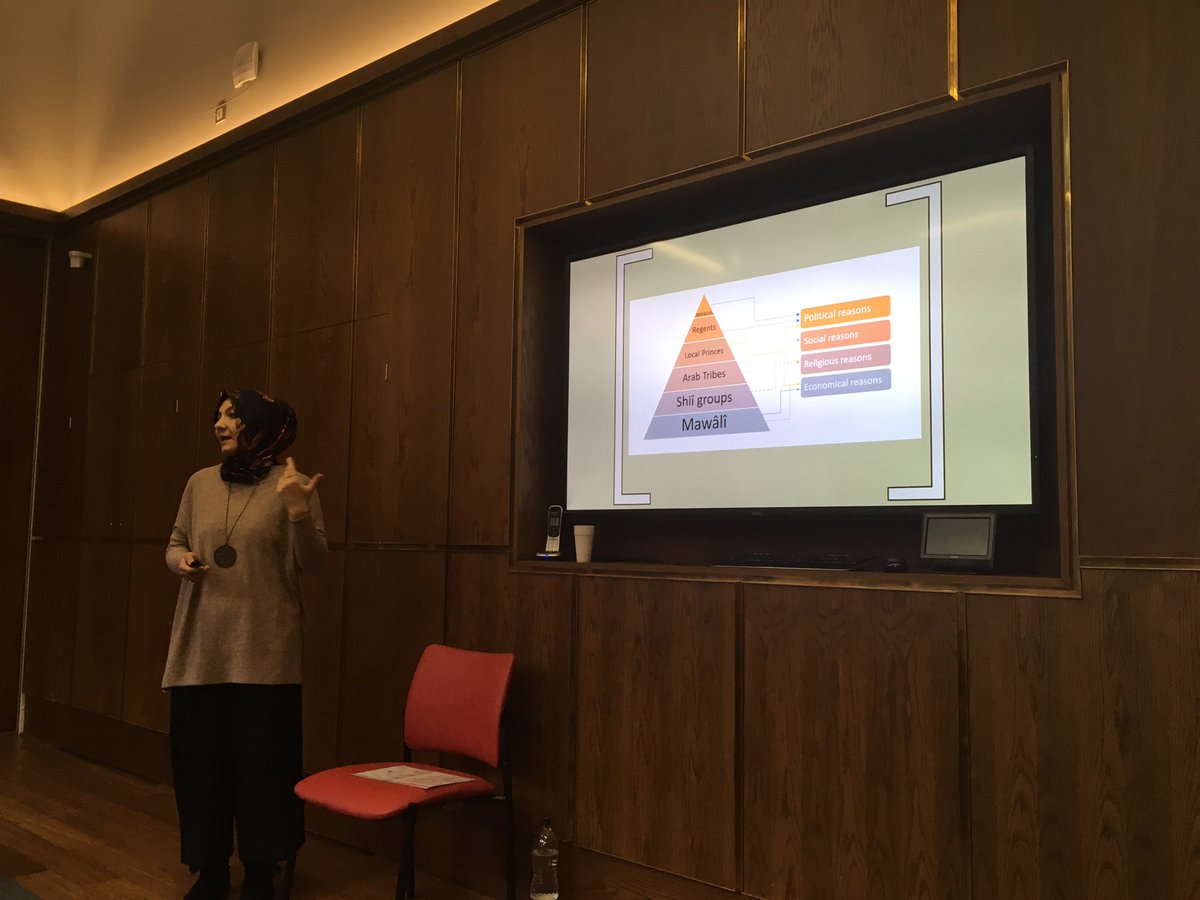
Best Paper Runner-up: Oznur Ozdemir, Leeds University

“Re‐evaluating an Early Islamic Mass Movement: Looking at the Abbasid Revolution from an Economic Perspective.”

damci2wuqaa5w2r

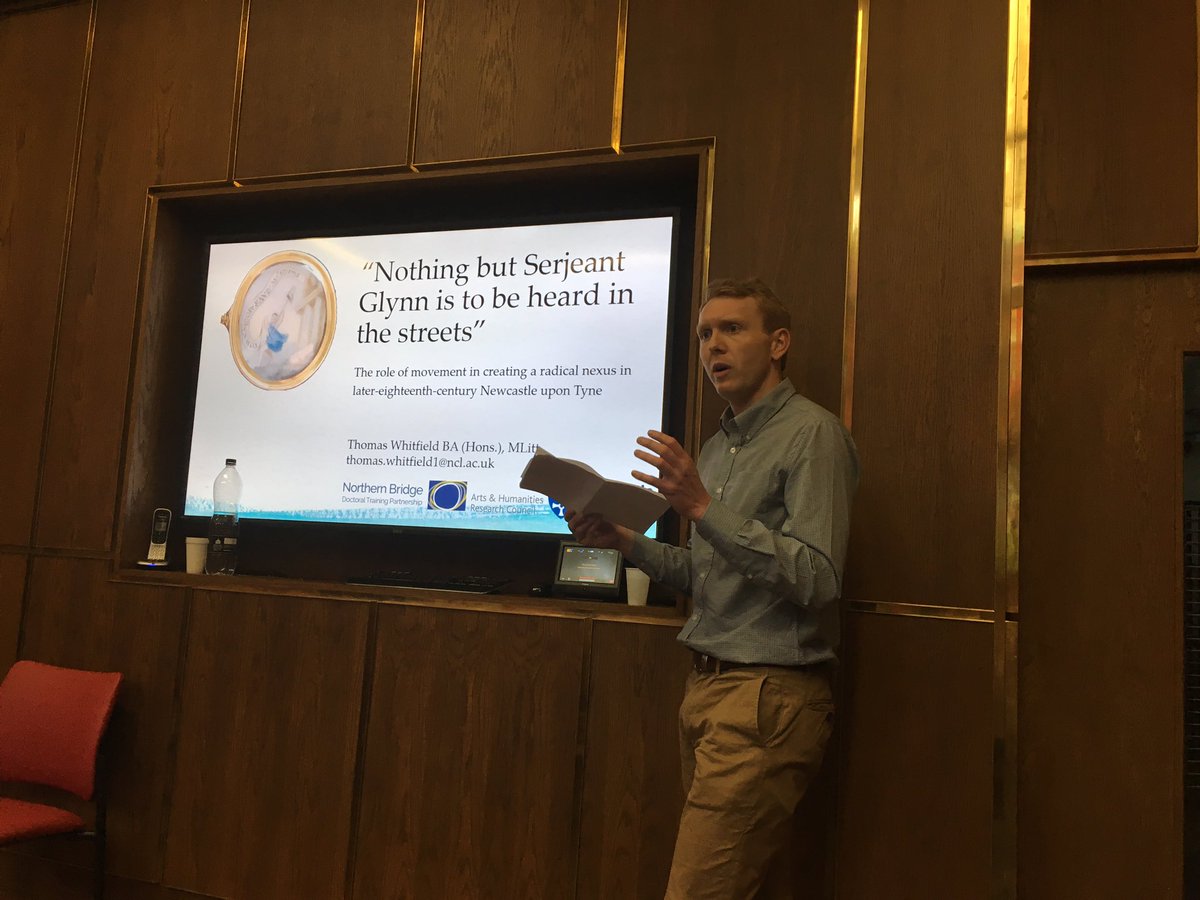
Best Paper: Thomas Whitfield, Newcastle University

“’Nothing but Serjeant Glynn is to be heard in the streets’– The role of movement in creating a radical nexus in later-eighteenth-century Newcastle upon Tyne.”

daq6rspw0ae4c2x

We would like to thank everyone who contributed and attended the conference. It was a huge success, we look forward to next year!

daq6lvuwaaeguhy