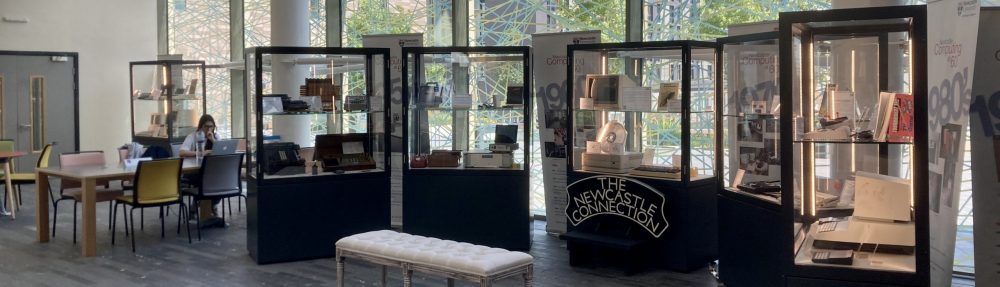
The original Computing Laboratory, founded in 1957, served a dual function, providing computing support as well as taking an academic role. It was located in Kings College, the Newcastle Division of Durham University. This split from Durham University in 1963, becoming the University of Newcastle upon Tyne. Newcastle University later chose to separate the functions and today the School of Computing serves the academic function while the Newcastle University IT Service (NUIT) supports computing across the University. (The NUHC Committee continues to cover both, as does this Timeline.)
1957
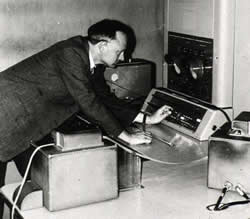
The Computing Laboratory’s first computer, indeed believed to be the first in the N.E. of England, a Ferranti Pegasus, was installed in November 1957. In the early 1960s the Laboratory awarded its first postgraduate qualifications, and then, in 1967, became one of the first UK universities to teach an undergraduate degree programme in Computing Science. Dr Ewan S Page was appointed Acting Director of Durham University Computing Laboratory at King’s College, Newcastle, from July 1957, and then Director in December 1957. The initial focus was for the Laboratory to provide computing support to researchers in both Durham and Newcastle. However, in this new field the provision of education for users was essential and almost immediately this led to the establishment of undergraduate and postgraduate teaching activities.
1963
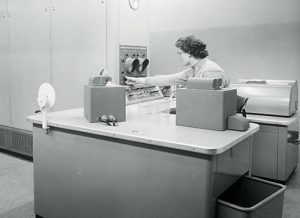
In 1963, when Newcastle and Durham became separate universities, the Laboratory became part of the new University of Newcastle upon Tyne, whilst maintaining close links with Durham. The Laboratory was established in a house in Kensington Terrace and spread over the next few years into a number of adjoining houses. Its Ferranti Pegasus (christened FERDINAND — FERranti DIgital and Numerical Analyser Newcastle and Durham) is thought to have been the first computer installed anywhere in N.E. England.
Later in that academic year Newcastle became the first British University to teach a course in computer programming to undergraduates, when students in the final year of the Honours degree in Mathematics were offered a course in Numerical Analysis.
1964
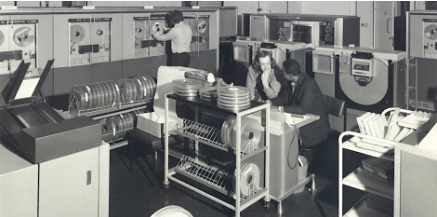
Demand for computing facilities grew rapidly, and in 1964 the Pegasus was replaced by an English Electric KDF9, and Ewan Page became Professor of Computing and Data Processing. This period saw the first high-level languages coming into widespread use, displacing the assemblers and autocodes of earlier years. As on the Pegasus, programs were prepared on paper tape, and loaded into the computer by operators. Program output would be returned some time later — quite possibly not until the next day — on line-printer paper or occasionally on further paper tape. The Postgraduate Diploma course developed into an MSc course in Computing Science, aimed at graduates in other disciplines.
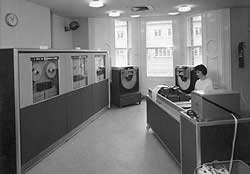
Research during this period focussed on automatic typesetting and on medical literature information retrieval. Two typesetting projects were undertaken in collaboration with the Department of Photography, under the direction of the late C.J. Duncan. The first, funded by the Department of Scientific and Industrial Research (DSIR) used Pegasus; the second, funded by the Ministry of Technology, used ALGOL 60 on the KDF9. The information retrieval work, which was directed by Elizabeth Barraclough, who had been appointed originally as the computer operator in 1957 and who later became Director of the Computing Service. The work was carried out in collaboration with the US National Library of Medicine and resulted in the development first of the MEDLARS and then the MEDUSA systems.
1967
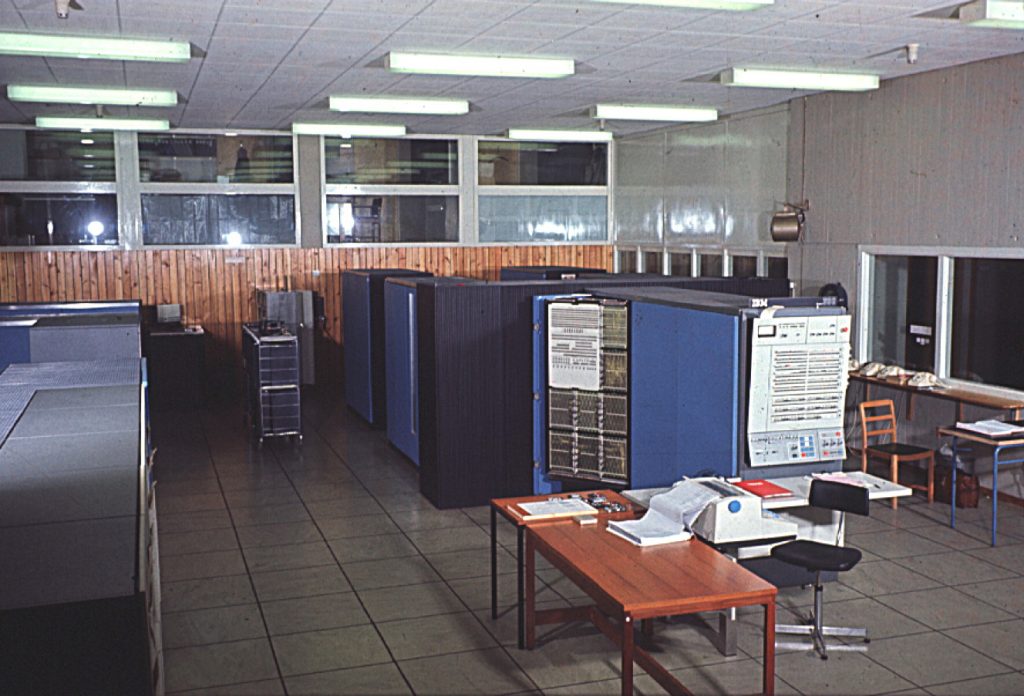
In preparation for the arrival of a new computer, an IBM System 360 Model 67, the Laboratory moved into a new building, Claremont Tower. The S/360-67, the first multiple-access computer outside North America, heralded a new style of computing. In addition to batch jobs run from decks of IBM punched cards the S/360-67 supported a number of remote access terminals. These terminals gave users something of the illusion of having the machine to themselves – an early precursor of today’s PC environment. Alongside the arrival of the S/360-67 was the creation of the NUMAC organisation – the Northumbrian Universities Multiple Access Computer which recognised the fact that the system was to provide services to both Newcastle and Durham Universities.
1967 also saw the introduction of our first undergraduate degree programme in Computing Science. Six students attended a short programming course at the end of the first year of their Mathematics degree, and then joined the Laboratory in the second year of the new BSc Honours Degree in Computing Science. These first graduates in 1969 were amongst the first computing science graduates from any UK university.
1968
In Autumn 1968 the first of the Newcastle International Seminars on the Teaching of Computing Science was held. The series was sponsored for many years by IBM, and subsequently by Amdahl and then ICL – it ran for more than 30 years thereafter. The proceedings of all the seminars in the series are available.
1969
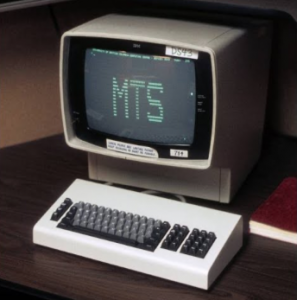
After initial experimentation with proprietary time-sharing systems, in 1969 the Laboratory adopted the Michigan Terminal System (MTS). For the next 20 years, it ran and helped Michigan University to develop (with six other universities worldwide) this community-supported system on a succession of mainframes.
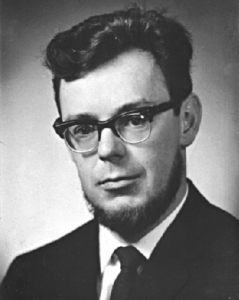
Professor Brian Randell joined the Laboratory in 1969 from IBM’s T J Watson Research Center, having earlier worked for English Electric on the Whetstone ALGOL compiler used on KDF9. Randell’s appointment led in 1972 to a major research initiative — originally termed “The Reliability Project” — that established a 40-year sequence of research projects in the area now termed “System Dependability”, encompassing Fault Tolerance, Computer Security, Safety-Critical Systems and related topics. Brian also initiated the Laboratory’s Technical Report series for the prompt publication of research results. Visit here to see more than 1,300 such reports.
1972
The department launched the first “advanced” master’s degree programme in a UK University, the MSc in Computing Software and System Design, funded through the Science Research Council.
1975
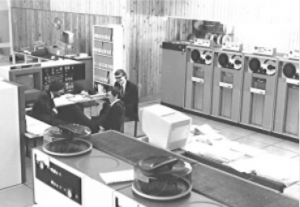
In 1975 the IBM S/360-67 was joined by a more powerful IBM S/370-168, again obtained in partnership with Durham and now with Newcastle Polytechnic, who were assured by Professor Page that they would “get more bang for their buck” from the arrangement. Indeed, initially the 168 also provided services to Glasgow and Edinburgh Universities. Other hardware developments included the acquisition by the reliability project of a number of DEC PDP11 mini-computers.
1977
In 1977 the Reliability Project was awarded the British Computer Society’s Technical Achievement Award for its development of Recovery Blocks and the associated “Recovery Cache”.
Newcastle’s early experience of time-sharing systems with MTS created a very considerable demand for remote access to computing facilities, and inevitably drove initiatives in networking, most notably the campus-wide Nunet network.
1979
Professor Page, the Laboratory’s first Director, became acting Vice-Chancellor of the University in 1979, before taking up the post of Vice-Chancellor of the University of Reading in 1981. Professor Harry Whitfield, previously of the Universities of Edinburgh and Groningen, and a major contributor to the development of the Edinburgh Multi-Access System (EMAS) joined the Computing Laboratory as its new Director.
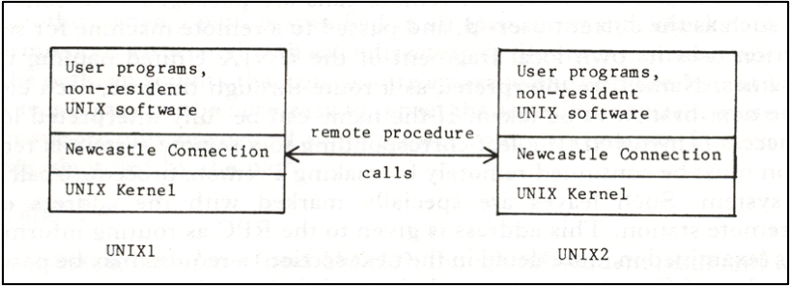
The early 1980s saw the development of the Newcastle Connection — one of the first systems to provide a distributed version of UNIX. The Connection later provided the basis for the implementation of an innovative Distributed Secure System.
In response to an initiative from British Telecom (now BT), and stimulated by the new availability of readily programmable microelectronic devices, a joint honours degree programme in Computing and Electronic Engineering was revised to become a four-year Master of Engineering degree in Microelectronics and Software Engineering, from which students graduated from 1987 until the late 1990s.
Also in the mid 1980s the Laboratory played an influential role in the establishment of the Microelectronic Applications Research Institute (MARI), a joint venture between Computer Analysts and Programmers (now CAP-Gemini), Newcastle University and Newcastle Polytechnic (now Northumbria University). The company operated successfully for many years, undertaking specialist contract computing research and participating, often as coordinator, in a large number of EU-funded projects. MARI also established a training division based in Gateshead, providing what would now be termed “modern apprenticeships” in this emerging high technology field at a number of centres across the UK.
1984
The Centre for Software Reliability (CSR) was launched in 1984 under the direction of Dr Tom Anderson. CSR aims to transfer to industry the understanding developed through the years of the reliability project and its successors. CSR ran a number of seminars, initially leading to the establishment of the Software Reliability and Metrics Club, and subsequently (from 1991) the Safety Critical Systems Club. A major component of this activity was a long-running (17-year) research project between Newcastle and York Universities and BAE Systems. Wider industrial involvement was also encouraged through the UNITE industry forum and its newsletter.
1985
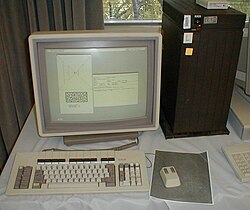
In 1985 the Laboratory received a $1M equipment gift from Xerox of advanced personal workstations — machines with a megabyte of memory, a million pixels, and a processor speed of a million instructions per second — together with one of the first Ethernet installations in the UK, providing early experience of the type of computing interface that was to become the hallmark of Apple computers in the following decades.
In the same year, following national recognition of the importance of computing science, a number of senior academic posts were created. Lecturers Tom Anderson and Santosh Shrivastava both became Professors, and in 1986 Pete Lee, who had been a researcher on the reliability project in the 1970s, returned to the Laboratory from the USA as a Professor. He brought with him from the Encore Corporation a detailed knowledge of shared memory multiprocessor systems, resulting in the Laboratory’s installation in 1987 of an Encore Multimax 120 to provide support for parallel processing research. This machine was subsequently upgraded to support student teaching, and an Encore Multimax 520 installed to further the research.
1988
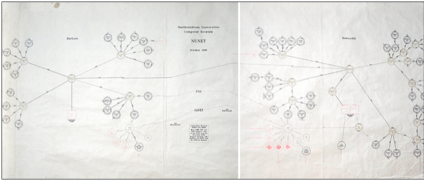
Introduced in the late 1970s, by 1988 NUMAC’s network supported almost 1,200 remote connections at Newcastle and Durham together with connections to the two (by then Amdahl) mainframes at the two universities, and to national and international services. This work was initially directed by Denis Russell, who was later to become Deputy Director of the Computing Service, and influential in the development of a TCP/IP-based national academic network.
1989
Funded by the Joint Information Systems Committee (JISC) Mailbase, a pioneering electronic mailing list service for the UK academic community set up by the computing service under Jill Foster’s leadership, first became fully operational. It rapidly expanded – its discussion lists covered every academic discipline, enabling informal scholarly exchange and supporting research communities. The service had expanded to over 2,300 lists and more than 165,000 members globally by the late 1990s.
In 1989 a SENATE Working Party Report (the “Crombie Report”) recommended “a formal separation of the computing service from the academic department of computing”, but a campaign against such separation led to Senate voting to reject the proposed split.
1991
In 1991, University Senate returned to the issue and accepted a proposed separation of the Computing Laboratory with a resolution that “the name Computing Laboratory should no longer be used”, splitting the academic and service functions. The two components became the University Computing Service, directed by Elizabeth Barraclough, and the Department of Computing Science. Professor Whitfield chose to concentrate on its academic function, but stepped down as Head of Department in 1992, and was succeeded by Professor Tom Anderson.
The undergraduate BSc degrees in Computing Science and in Software Engineering had been targeted at those seeking to make contributions to the further development of hardware and software technologies. However, by the early 1990s there was an emerging need for graduates with a clear understanding of current technologies and the ability to apply these in novel ways in important applications areas. To cater for this demand the department introduced a new undergraduate programme in Information Systems, with possible components from Business, Accounting and Management.
The 25th annual Newcastle International Seminar on the Teaching of Computing Science took place in 1992, celebrating with presentations from eight of its most distinguished former speakers, including no less than six holders of the ACM Turing Award. The proceedings of this and all seminars in the series are available.
1997
The Laboratory celebrated its 40th anniversary in 1997 with a half-day seminar at which Professor Page was the keynote speaker. Other speakers reported on various aspects of its past achievements.
Professor Anderson stepped down as Head of Department in 1997, becoming Dean of the Faculty of Science. Dr John Lloyd succeeded him as Head of the School of Computing Science. The University undertook a major restructuring in 2002, reducing from more than 70 departments in seven faculties to 27 schools in three faculties. Computing Science retained its identity as a School in the Faculty of Science, Agriculture and Engineering, although the research group in VLSI Systems Design chose to move to the School of Electrical, Electronic and Computer Engineering. Nevertheless the group maintained strong collaboration with former colleagues working on theoretical computer science, especially in the area of asynchronous systems. Dr Lloyd remained as Head of School until 2006, when he became Head of the School of Natural Sciences (now the School of Chemistry).
2000

Recognition of the strength of the Distributed Systems Research group led by Professor Santosh Shrivastava came in 2000 when it was awarded the BCS Technical Achievement Award for its development of the Arjuna middleware system. The department thus joined Cambridge University Computing Laboratory as the only university groups to have won the award on two occasions. The group also established a spin-out company, Arjuna Solutions, which was later sold to an American company, Bluestone Inc. for $13M. Bluestone was ultimately acquired by Hewlett Packard, leading to the establishment of an HP research laboratory in Newcastle. Following a change of middleware strategy by Hewlett Packard the original founders formed Arjuna Technologies, now based on the University campus, to further develop their technologies in the areas of web and cloud computing. In 2008 Arjuna’s transaction software was sold to the middleware supplier JBoss, which was in turn acquired by Red Hat Inc., who a few years later renamed it Narayana. Red Hat itself was acquired by IBM in 2019 for $34 billion. Narayana, still with Arjuna Core as a sub-component, remains a strategic component for transaction management in their middleware and enterprise Java application infrastructure..
2001
The new millennium saw the School adopt a much broader perspective in both research and teaching. In 2001 the School was invited to become the home of one of the Joint Research Council’s Regional e-Science centres, directed by Professor Paul Watson, leading to collaboration with a wide range of science and engineering departments and with other North-East Universities in developing and exploiting web and cloud computing. The rapidly growing field of Bio-informatics had become a particular strength, under Professor Neil Wipat. The School also became the coordinator of one of EPSRC’s interdisciplinary research collaborations, directed by Professor Cliff Jones. The Dependability IRC (DIRC) built on the long history of related research at Newcastle, addressing in particular the human element of dependability.
As part of the restructuring process the University established a number of research institutes, including the Informatics Research Institute, led by Professor Michael Harrison, who joined the school from the University of York. A particular focus of the Institute (later the Digital Institute, directed by Professor Watson) was on the experience of users of computing systems, culminating in the award of a major grant for the SIDE project (Social Inclusion for the Digital Economy) led by Professor Watson, working with colleagues at the University of Dundee.
The North-East Regional e-Science Centre (NEReSC)was established in July 2001, funded by the EPSRC and DTI through the UK Core e-Science programme, to provide expertise in e-Science and to instigate and run a set of industrially focused projects. The aims of the centre were: 1) to become a centre of excellence in e-Science 2) to initiate and manage a programme of industrially focused projects with matching industrial contributions 3) to act as a first point of contact for e-science in the region, for companies and university research groups 4) to develop specialist expertise in database-intensive computing on the Grid 5) to develop communication, awareness and training activities in e-Science related fields 5) to participate in a national Grid of computing/data resources and facilities.
2004
With the support of Northumbria Police the School established the Centre for CyberCrime and Computer Security (CCCS), directed by Professor Aad van Moorsel, who had joined the School in 2004 from Hewlett Packard, to provide advice and education in this increasingly important area.
2006
In 2006 Professor Lee succeeded Dr Lloyd as Head of School, presiding over a broadening of the spectrum of degree programmes and substantial expansion of student numbers. There were now variants of the BSc in Computing Science in Distributed Systems, in Software Engineering, and in Games and Virtual Environments. New Masters degree programmes were offered in Computer Security and Resilience, Bio-Informatics, E-Business and Information Systems, and Games Engineering, as well as in Internet Technologies and Enterprise Systems (a descendent of the original advanced MSc in Computing Software and System Design) and a more general MSc in Advanced Computer Science. The school received HEFCE Centre of Excellence in Teaching and Learning (CETL) funding for the Active Learning in Computing (ALiC) project directed by Dr (now Professor) Chris Phillips, enabling development of innovative approaches to group project activity. In a nod to the University’s roots, the project included collaborative group project work with students at Durham University.
2011

In 2011, Netskills moved from the Computing Service and joined the School of Computing Science. The Netskills service had been first established in 1995 as part of the JISC Electronic Libraries (e-Lib) programme. The original project was called: Network Skills for Users of the Electronic Library.. It provided services to a wide range of clients including all UK universities and most FE colleges, as well as public libraries, schools, the commercial sector, government and non-government organisations. The Computing Service at Newcastle University remained the home of Netskills until December 2014 when the project finished
2012
Professor Aad van Moorsel took over from Professor Lee as Head of the School of Computing, inheriting a thriving organisation. Student numbers had increased from six undergraduates, nine MSc /Diploma students and eight PhD students in 1967 to around 500 undergraduate, 140 MSc and 85 PhD students. By this point the single computer that served the entire university in 1957 had become several hundred computers in the School of Computing Science alone, with many more elsewhere across the University.
2013
Newcastle University’s cross-faculty ACE-CSR (Academic Centre of Excellence in Cyber Security Research) was established in 2013 to focus on holistic cyber security and resilience research. The Centre is led by Professor Thomas Gross from the School of Computing. It addresses core cyber security techniques and key emergent application areas relevant to society, featuring research themes such as artificial intelligence in security, bio/nano cyber security, and responsible and sustainable innovation.
2014
In December 2014, The School of Computing Science received a fantastic result in the REF2014 exercise, jumping from 22nd to 9th place in the UK by GPA, placing the School in the top quartile for Computing Science. The school was ranked first in the country for the economic, social and cultural impact of its research, with all of its impact case studies ranked as Outstanding.

The Digital Civics Centre for Doctoral Training (CDT) was an EPSRC-funded project with a budget of £4.7 million, operating primarily between 2014 and 2024, training PhD researchers across multiple academic disciplines including computing, education, public health, politics, and sociology. (Digital Civics is an interdisciplinary field exploring how digital technologies can empower citizens and communities, enhancing participatory citizenship by fostering real-world impact through collaborative research and innovative digital tools.)
2017
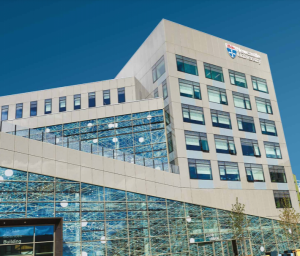
The School of Computing Science moved into the new Urban Sciences Building (USB) on the Newcastle Helix site, a collaboration between Newcastle University, Newcastle City Council and Legal & General, and previously the home of Newcastle Breweries. The USB is a £58 million facility with innovative teaching and learning spaces for students and dedicated lab space for the School’s research groups.

The Newcastle Urban Observatory was officially established in 2017, located in the Urban Sciences Building. It began as part of the National Urban Observatories initiative, with significant funding support of £8.5 million from the Engineering and Physical Sciences Research Council (EPSRC). It is a university-wide initiative centered at the Urban Sciences Building, with active involvement from the School of Computing, the Faculty of Science, Agriculture & Engineering, and interdisciplinary collaboration across faculties to advance urban research and data-driven city innovation. It operates the UK’s largest urban monitoring program, using over 4,000 sensors to collect real-time data on a wide variety of urban indicators such as air quality, noise, energy use, traffic flows, biodiversity, weather, and green space usage.

Professor John Fitzgerald, who had played a key role in the development of the USB, became Head of School until 2022 when he became a Dean in the Faculty of Science, and Professor Graham Morgan took over as Head of School.
2019
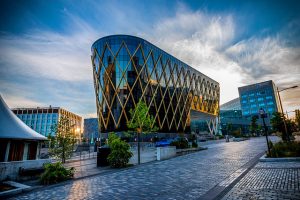
The USB was joined on the Helix site by the Catalyst, home to the National Innovation Centre for Data (NICD) and the National Innovation Centre for Ageing (NICA). NICD, directed by Professor Paul Watson, Professor Steve Caughey and Professor Barry Hodgson and was founded with £30 million funding – split equally between the government and Newcastle University. Working closely with the School of Computing’s Scalable Computing group, it facilitates collaborative data projects and skills transfer to address real-world problems. To date (late 2025), a total of 160 collaborative projects, and the 90 with North East companies have created 1,500 jobs and are projected to add £800M to the regional Gross Value Added (GVA) over the next decade. These projects integrate academic research expertise from the School with practical data science and AI applications for business and public sectors.
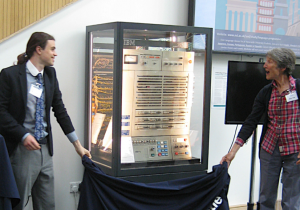
The Networked and Ubiquitous Systems Engineering (NUSE) research group was set up by the School of Computing, directed jointly by Professors Raj Ranjan and Graham Morgan. And in June 2019 the official opening of the first display of the Newcastle University Historical Computing Collection took place.
2020
On 30 August 2020, the DoppelPaymer ransomware infiltrated Newcastle University’s network, causing significant disruption. Critical systems were offline for weeks while NUIT restored services – a difficult task that they responded to magnificently. This incident is under investigation by the National Crime Agency.

The Centre for Digital Citizens (CDC), led by Newcastle and Northumbria Universities, explores how digital technologies can support areas such as public health and wellbeing, community engagement, citizen safety and technology-enhanced lifelong learning, was launched in November 2020
The five-year project has been funded with £3.7m from the Engineering and Physical Sciences Research Council (EPSRC), with matched funding from Universities and Industry Partners. The Centre is directed by Professor David Kirk of Newcastle University’s Open Lab. and Prof. Pam Briggs from Northumbria University. Key project partners include Newcastle City Council, NHS Digital, the International Federation of the Red Cross and Red Crescent Societies, and BBC R&D.
2021
In the Research Excellence Framework (REF 2021), the School ranked in the Top 15 in the UK for in the Computer Science and Informatics unit of assessment, with its research judged as having world-leading impact.
2023

The Northern Health Futures (NortHFutures) Hub, an EPSRC-funded initiative launched in December 2023, is a cross-sector consortium of over fifty partners in higher education, health and social care, industry, and the public and voluntary sectors. Its co-directors are Prof. Abigail Durrant at Open Lab, Newcastle University, and Prof. Naeem Soomro, Consultant Urologist at Newcastle Hospitals NHS Foundation Trust. “The Hub facilitates responsible research, innovation and training surrounding healthcare technologies and digital health to address unmet health and care needs and inequalities in the North East and North Cumbria.”
2024

The National Edge AI Hub was launched, one of nine “hubs” constituting a UK-wide research initiative of UK Research and Innovation (UKRI) and the Engineering and Physical Sciences Research Council (EPSRC). The National Edge AI Hub is led by Newcastle, involves 15 academic partners across the UK, and has forged a number of strong industry partnerships, focused on advancing fundamental research in Artificial Intelligence (AI) ) at the edge of computing environments. It is headed by Professor Raj Ranjan, co-director of the School of Computing’s Networked and Ubiquitous Systems Engineering (NUSE) Group.
2025

The North East Space Communications Accelerator (NESCA), a £2.5 million initiative funded by the Engineering and Physical Sciences Research Council (EPSRC) to boost the region’s space sector, was launched. It aims to accelerate resilient space communications technology by integrating research, innovation, skills development, and economic growth through a collaboration of universities, public sector bodies, and industry partners. NESCA is led by Northumbria University, with Durham and Newcastle universities as key partners. Newcastle University’s academic lead is Dr Deepayan Bhowmik, Senior Lecturer in Data Science at the School of Computing.

And also in 2025, the School of Computing received the Athena Swan Silver Award – “a prestigious mark of progress, evidencing real, institution-wide or departmental change to advance gender equality.”